Best Photography Spots in Morocco: A Photographer's Location Guide
As an Amazon Associate, ExifGrabber earns from qualifying purchases.
Why Morocco Is a Photographer's Paradise
Morocco sits at the crossroads of Africa, Europe, and the Arab world, and that cultural collision shows in every frame. Within a single trip you can shoot blue-washed alleyways, terracotta medinas, Atlantic fishing ports, snow-capped mountains, and rolling Sahara dunes. The light is extraordinary year-round, and the country's compact geography means you can move between radically different landscapes in a few hours.
Whether you shoot street, landscape, architecture, or portraits, Morocco delivers. Here are the locations that belong on every photographer's shot list, along with practical tips on when to visit and what gear to bring.

Chefchaouen: The Blue City
Chefchaouen is the single most photographed town in Morocco for good reason. Nestled in the Rif Mountains, the medina's buildings are painted in every shade of blue, from powder to cobalt to deep indigo. The color was originally introduced by Jewish refugees in the 1930s and has been maintained ever since as a local tradition.
What to Shoot
The narrow alleyways are the main attraction. Look for doorways framed in contrasting blue tones, potted plants adding pops of green and orange, and cats lounging on blue steps. The Kasbah garden offers an elevated view of the medina against the mountain backdrop. The weekly market on Thursdays and Mondays brings extra color with produce stalls and textiles.
Best Time and Settings
Arrive at sunrise before the crowds. The soft morning light bouncing off the blue walls creates a dreamy, even illumination that eliminates harsh shadows. Midday sun creates deep contrast in the narrow streets, which can work for dramatic compositions but makes exposures tricky. Shoot in aperture priority around f/5.6 to f/8 for sharp architectural details while keeping a manageable depth of field.
Gear Tips
A 24-70mm lens covers most situations here. A wider lens like the Tamron 17-28mm f/2.8 Di III RXD is useful in the tightest alleyways where you cannot step back. Bring a polarizing filter to deepen the blue tones and cut reflections on wet-painted surfaces.
Marrakech: Chaos and Color
Marrakech is sensory overload in the best possible way. The medina, a UNESCO World Heritage Site, is a maze of souks, riads, palaces, and mosques wrapped in warm terracotta tones. The energy here is relentless, making it one of the best cities in the world for street photography.
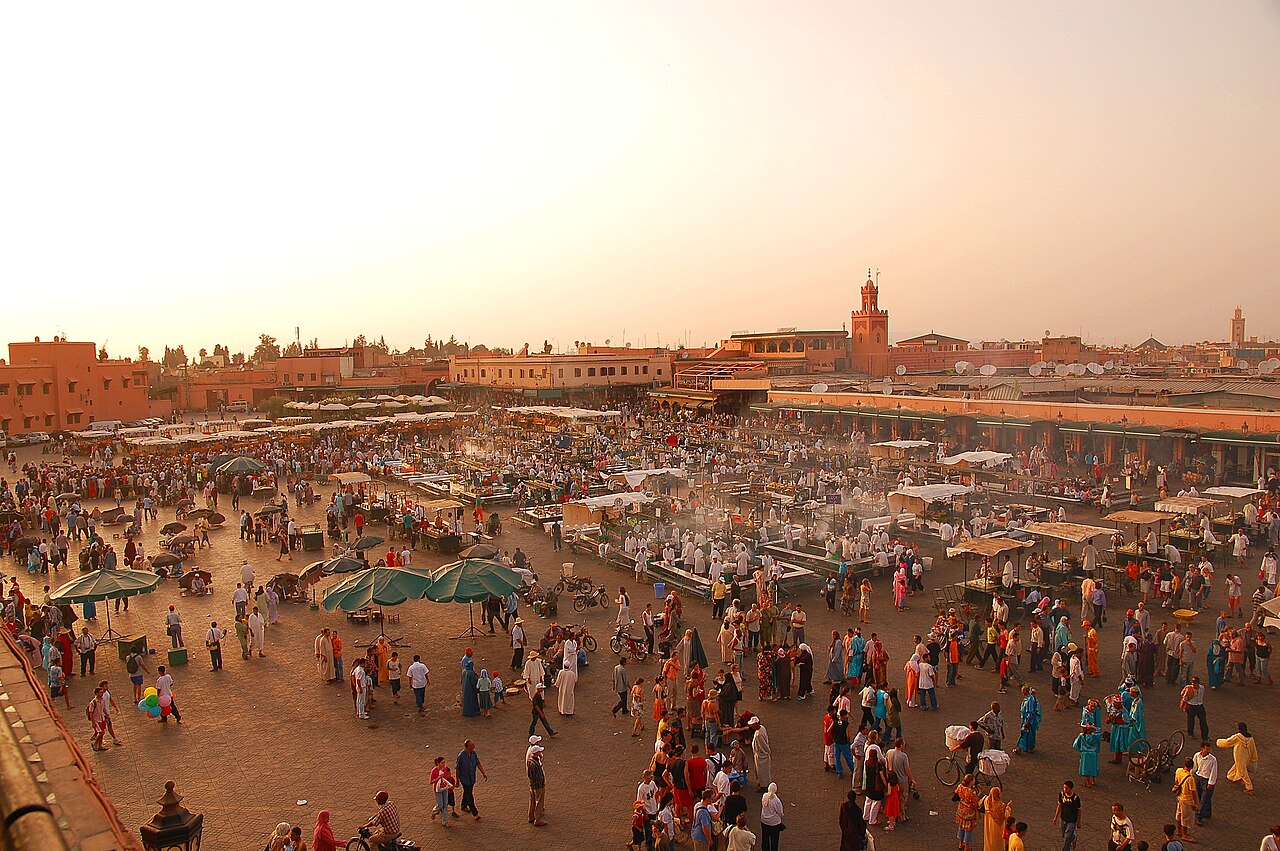
Jemaa el-Fnaa Square
The main square transforms throughout the day. In the morning it is relatively quiet with juice vendors and snake charmers. By evening it becomes an open-air food market packed with smoke, steam, and thousands of people. Shoot from the Cafe de France or Cafe Glacier terraces for an elevated view of the entire square at sunset, when the warm light hits the Koutoubia Mosque minaret in the background.
The Souks
The covered souks radiating from Jemaa el-Fnaa are where Marrakech's commercial life plays out. Spice pyramids, hanging lanterns, leather goods, and metalwork fill narrow passages lit by shafts of light from openings above. The contrast between bright shafts and deep shadow can exceed 10 stops, so shoot in RAW and be prepared to recover highlights. A fast prime like a 35mm f/1.8 handles the low light and tight spaces well.
Bahia Palace and Ben Youssef Madrasa
These architectural landmarks feature intricate zellige tilework, carved cedar ceilings, and tranquil courtyards. Arrive when they open to photograph without crowds. The geometric patterns call for careful composition. Use ExifGrabber to check your EXIF data afterward and confirm your settings captured enough detail in those intricate patterns.
Majorelle Garden
Yves Saint Laurent's restored botanical garden pops with cobalt blue buildings and neon-bright bougainvillea. The contrast between the deep blue and vivid orange terracotta pots is a photographer's dream. The garden gets busy by mid-morning, so arrive at opening time.
Fes: The Oldest Medina
Fes el-Bali is the world's largest car-free urban area and feels like stepping back several centuries. The medina has over 9,000 alleyways, and getting lost is part of the experience.
The Tanneries
The Chouara Tannery is Fes's most iconic photography subject. Workers dye leather in stone vats filled with vivid natural colors. The best viewpoint is from the surrounding leather shops' rooftop terraces. Late morning light illuminates the vats most evenly. A 70-200mm zoom lets you isolate individual workers and color patterns from the elevated vantage point.
Architecture and Details
The Al-Qarawiyyin Mosque (founded in 859 CE, considered the world's oldest university) and the ornate Bou Inania Madrasa offer stunning examples of Marinid architecture. Non-Muslims cannot enter most mosques, but the doorways and visible interiors are still incredibly photogenic.
Essaouira: Atlantic Light

This Atlantic coastal town has a completely different feel from the inland cities. The fortified port town was built by the Portuguese in the 18th century, and the blue and white color palette combined with constant ocean light gives it an almost Mediterranean atmosphere.
What to Shoot
The fishing port is the star. Rows of bright blue boats, fishermen mending nets, and seagulls circling overhead make for dynamic compositions. The Skala de la Ville ramparts offer sweeping views of the coastline and crashing waves. The medina streets are quieter and more relaxed than Marrakech, with beautiful doorways and whitewashed walls.
Wind and Weather
Essaouira is known as the "Windy City of Africa." The strong trade winds create dramatic wave action and moody skies but also make tripod work challenging. A Peak Design Travel Tripod with its low center of gravity handles wind better than tall, thin alternatives. The wind also carries salt spray, so bring lens cloths and a rain cover for your camera.
The Sahara Desert: Erg Chebbi and Erg Chigaga
No trip to Morocco is complete without photographing the Sahara. The two main dune fields accessible from Morocco are Erg Chebbi (near Merzouga) and Erg Chigaga (more remote, less touristed). Erg Chebbi is the more popular option with dunes reaching 150 meters high.

Sunrise and Sunset on the Dunes
The golden hour on Sahara dunes is among the most spectacular light shows in photography. The low-angle sun sculpts deep shadows along the rippled sand ridges, creating abstract patterns of light and dark. The color shifts from cool blue pre-dawn through golden amber to deep orange in minutes.
Get to the top of a high dune 30 minutes before sunrise. Shoot both wide landscapes and tight abstracts of sand patterns. A 70-200mm or even a 100-400mm telephoto compresses the dune layers beautifully and isolates individual ripple patterns.
Night Sky
The Sahara has some of the darkest skies in North Africa. Milky Way photography is exceptional from March through October. Mount your camera on a star tracker for long exposures or shoot untracked at wide apertures with a fast wide-angle lens. Check out our guide on the best lenses for Milky Way photography for lens recommendations.
Practical Considerations
Sand gets everywhere. Use a rain cover or plastic bag over your camera and change lenses inside a bag or jacket. Bring a blower brush to clear sand from your sensor and lens mount. Temperatures drop dramatically after sunset in the desert, so pack warm layers.
Ait Benhaddou: The Cinematic Kasbah
This UNESCO World Heritage Site is a fortified village of earthen clay buildings stacked along a hillside in the High Atlas foothills. It has been used as a filming location for Gladiator, Game of Thrones, and Lawrence of Arabia, and it looks cinematic in person.
What to Shoot
The best overall view is from across the river, where the entire ksar is visible against the mountain backdrop. Cross the river (stepping stones or a small bridge) to photograph the narrow passages and crumbling interiors. Climb to the top of the ksar for panoramic views of the surrounding desert and palm groves.
Best Light
Morning light hitting the eastern face of the ksar is warm and dramatic. Late afternoon works well for the western side. The earthen buildings glow a deep amber in golden hour that is hard to beat. Midday light flattens the textures, so plan your visit for early morning or late afternoon.
The High Atlas Mountains
The High Atlas range runs across Morocco and includes Jebel Toubkal, North Africa's highest peak at 4,167 meters. The mountain landscapes are dramatic, and the Berber villages scattered through the valleys add human interest to landscape compositions.
Imlil Valley
The gateway village to Toubkal treks, Imlil sits at 1,740 meters surrounded by terraced fields and walnut groves. The Kasbah du Toubkal perched above the village makes a stunning foreground subject with the snowy peaks behind it. Spring (April to May) brings wildflowers and snow-capped peaks in the same frame.
Todra and Dades Gorges
These narrow canyons in the eastern High Atlas feature towering red and orange limestone walls up to 300 meters high. The light in Todra Gorge is best in the morning when the sun penetrates the narrow slot and illuminates the rock walls. A wide-angle lens captures the vertical scale effectively.
The Hassan II Mosque, Casablanca
The Hassan II Mosque is one of the largest mosques in the world, with a minaret standing 210 meters tall. It is built partly over the Atlantic Ocean, and the combination of Islamic architecture, crashing waves, and dramatic skies makes for powerful images.
The exterior is freely photographable, and non-Muslims can visit the interior on guided tours. The interior features intricate marble floors, carved plaster, and a retractable roof that floods the prayer hall with natural light. Sunset from the esplanade, with waves breaking against the foundation, is the classic shot.
Camera Gear for Morocco
Morocco is a walking destination. You will cover significant distances on foot through medinas, up dunes, and along mountain trails. Pack light but versatile.
Recommended Kit
| Item | Why |
|---|---|
| Mirrorless body (APS-C or full frame) | Lighter than a DSLR for long walking days |
| 24-70mm f/2.8 or 24-105mm f/4 | Covers 90% of situations |
| 70-200mm f/2.8 or f/4 | Tanneries, desert details, mountain compression |
| Fast prime (35mm or 50mm) | Low-light souks and street work |
| Circular polarizer | Deepens blue skies and cuts reflections |
| ND filter set | Long exposures at waterfalls and coast |
| Lens cleaning cloth and blower | Sand and dust are constant |
| Extra batteries | Heat drains batteries faster |
Street Photography Etiquette
Morocco is a Muslim-majority country, and photographing people requires sensitivity. Always ask permission before taking someone's portrait, especially women and children. Some people in tourist areas (snake charmers, henna artists, water sellers in traditional dress) expect a small tip for photos. Be respectful, engage with your subjects, and you will get better portraits as a result.
Planning Your Photography Trip
Best Seasons
The ideal photography seasons are spring (March to May) and autumn (September to November). Temperatures are comfortable, the light is warm, and the landscapes are at their most colorful. Summer (June to August) brings extreme heat inland, especially in the desert and Marrakech, though the coast stays pleasant. Winter (December to February) is cooler and brings snow to the Atlas Mountains, which creates beautiful contrasts.
Getting Around
Renting a car gives maximum flexibility for landscape locations. The major highways are good, though secondary roads in the mountains can be challenging. For cities, walk. The medinas are car-free by necessity, and walking lets you discover photo opportunities that you would miss from a vehicle.
Connectivity and Power
Morocco has good 4G coverage in cities and along major highways. Electrical outlets use the European Type C/E plugs (220V). Pack a universal adapter and a portable battery bank for long shooting days.
Final Thoughts
Morocco rewards photographers who slow down and explore. The country is not just photogenic on its surface; it has depth, history, and humanity that come through in images when you take the time to look. From the abstract blue geometry of Chefchaouen to the raw scale of the Sahara, every region offers something visually distinct.
Upload your best Morocco shots to ExifGrabber to analyze the EXIF data and see which settings produced your strongest images. Understanding your own shooting patterns is one of the fastest ways to improve, and Morocco gives you an incredible variety of conditions to learn from.