Best Photography Spots in Southeast Asia: A Photographer's Location Guide
As an Amazon Associate, ExifGrabber earns from qualifying purchases.
Why Southeast Asia?
Southeast Asia packs an extraordinary density of photographic subjects into a relatively compact region. Ancient temples, volcanic landscapes, terraced rice fields, dense tropical jungles, bustling cities, and warm coastlines sit within short flights of each other. The cost of travel is low, the food is incredible, and the light is dramatic year-round thanks to the tropical latitude.
For photographers, the region offers something that more "polished" travel destinations often lack: texture. The chaos of a Vietnamese market, the stillness of a Laotian monastery at dawn, the raw geometry of a Burmese temple plain. These aren't scenes you need to manufacture. You just need to show up at the right time with a camera.
Here are the locations worth building a trip around, organized by country.
Cambodia
Angkor Wat, Siem Reap
No photography guide to Southeast Asia can skip Angkor Wat. The world's largest religious monument is one of the most photographed buildings on earth for good reason: the symmetry is perfect, the bas-reliefs are endlessly detailed, and the sunrise silhouette reflected in the lotus ponds is genuinely breathtaking.

Best time to shoot: Arrive by 5:00 AM for sunrise. The classic reflection shot works from the left (north) pond, which catches the temple silhouette and sky color. Post-sunrise, explore the interior corridors where shafts of light cut through doorways.
Don't miss: Ta Prohm (the "Tomb Raider temple" with trees growing through the ruins) and Bayon (faces carved into every tower). Both are less crowded in the afternoon.
Gear tip: Bring a wide-angle lens (16-35mm) for the temple exteriors and a fast prime (50mm f/1.4 or f/1.8) for the dark interior corridors. A compact travel tripod is essential for the pre-dawn shots.
Season: November through February offers the driest weather and coolest temperatures. March through May is brutally hot but less crowded.
Myanmar
Bagan
Over 2,000 temples and pagodas spread across a dusty plain beside the Irrawaddy River. Bagan is unlike anywhere else on earth. The sheer density of ancient structures means you can shoot for a week and never run out of compositions.

Best time to shoot: Sunrise and sunset are peak hours. The warm light raking across the temples creates long shadows and golden highlights. Hot air balloons launch at dawn from October through March, adding a classic element to the skyline.
Access note: Myanmar has restricted climbing on most temples for preservation. Check current regulations before your trip. Several designated viewing mounds offer elevated perspectives.
Gear tip: A telephoto zoom (70-200mm f/4 or similar) is crucial for isolating individual temples from the plain. A drone (where permitted) opens up perspectives impossible from the ground.
Vietnam
Ha Long Bay
Nearly 2,000 limestone karsts and islands rising from emerald waters. Ha Long Bay is one of those places that looks surreal even in person. The interplay of rock, water, fog, and light changes constantly, and overnight boat cruises give you access to sunrise and sunset from the water.
Best time to shoot: October through December for the clearest skies. Misty mornings (common in March and April) create an ethereal quality that can be equally compelling. Shoot from the upper deck of your boat during golden hour.
Gear tip: A mid-range zoom (24-105mm) covers most situations. Bring a polarizing filter to cut reflections on the water and deepen the sky color. Check your filter thread size by looking up your lens EXIF data in ExifGrabber.
Hoi An
This UNESCO World Heritage town is pure visual candy. Narrow streets lined with yellow-painted buildings, hundreds of silk lanterns strung between rooftops, and the Thu Bon River reflecting it all at night. Hoi An rewards photographers who work slowly and explore on foot.
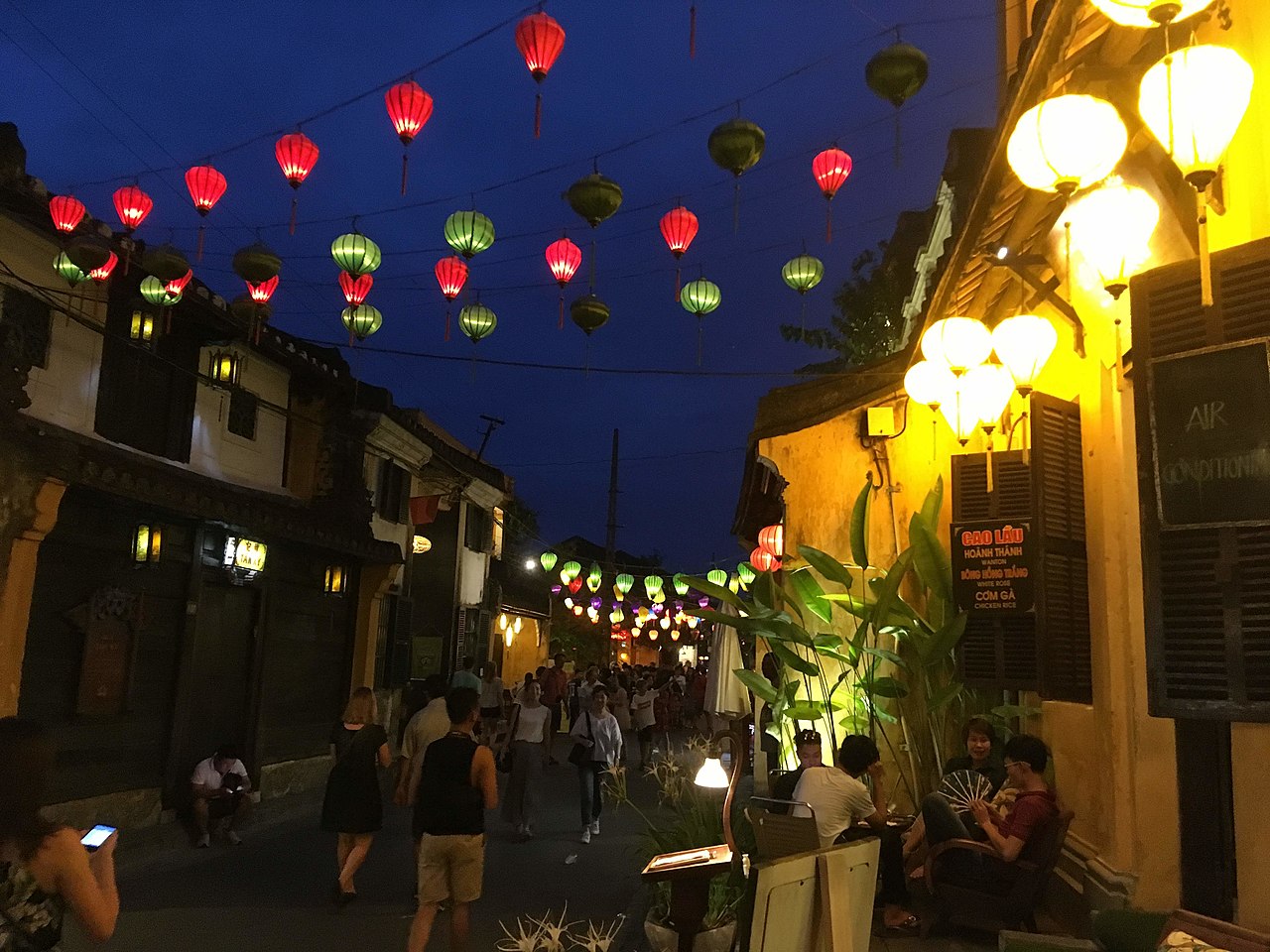
Best time to shoot: The lanterns are lit every evening, but the 14th of each lunar month (full moon) is the Lantern Festival, when the town dims electric lights and uses only candles and lanterns. This is peak Hoi An photography.
Gear tip: A fast prime (35mm or 50mm, f/1.4 or f/1.8) handles the low-light street scenes beautifully. Shoot at high ISO if you need to. The atmosphere matters more than pixel-level noise.
Laos
Luang Prabang
A small, walkable UNESCO town where saffron-robed monks collect alms at dawn, French colonial architecture lines quiet streets, and the confluence of the Mekong and Nam Khan rivers provides stunning sunset viewpoints.
Best time to shoot: The alms-giving ceremony happens every morning at approximately 5:30 AM. Use a telephoto from a respectful distance. Do not use flash or get in the way of the monks. This is a religious ritual, not a performance.
Sunset: Climb Phu Si Hill (328 steps) for 360-degree views of the town, rivers, and surrounding mountains. The fog rolling across distant peaks during the dry season creates layered compositions.
Season: November through February is dry and cool. The wet season (June through September) brings lush greenery and dramatic cloud formations, but trails and roads can be difficult.
Indonesia
Bali
Bali's combination of volcanic peaks, terraced rice fields, Hindu temples, and tropical coastline makes it one of the most visually diverse islands in the world.

Key spots:
Tegallalang Rice Terraces (near Ubud): Best photographed in early morning before the crowds arrive. The terraces are most photogenic when freshly planted (bright green) rather than harvested (brown stubble). A wide-angle lens captures the cascading layers.
Mount Batur: Sunrise treks start around 2 AM and reward you with views over the caldera lake as the sun breaks the horizon. Clear skies are most common from April through October.
Uluwatu Temple: Perched on a cliff 70 meters above the Indian Ocean. Sunset here is spectacular, especially when combined with the traditional Kecak fire dance performed at dusk.
Lempuyang Temple ("Gates of Heaven"): The famous shot through the split gateway toward Mount Agung. Arrive before 7 AM to avoid the queue. Note: the "reflection" often seen on social media is usually created by placing a phone screen below the lens.
Mount Bromo, East Java
A smoking volcanic cone rising from a vast caldera, surrounded by a sea of sand. Mount Bromo is one of the most otherworldly landscapes in Southeast Asia. The classic viewpoint at Penanjakan offers a panoramic view of Bromo, Mount Batok, and Mount Semeru (Java's highest peak) at sunrise.
Season: Dry season (April through October) provides the clearest views.
Thailand
Bangkok
Bangkok's photography appeal extends far beyond temples. The city layers old and new in visually striking ways: golden spires next to concrete overpasses, street food vendors beneath neon signs, long-tail boats on the Chao Phraya River with skyscrapers in the background.
Key spots: Wat Arun at sunrise (shoot from the opposite bank for the best silhouette), Chinatown's Yaowarat Road at night for neon and street food energy, and the Mahanakhon SkyWalk for aerial views.
Gear: A versatile zoom (24-70mm or 24-105mm) covers most Bangkok scenes. Bring a camera strap that keeps your gear close in crowded markets.
Chiang Mai
Northern Thailand's cultural capital offers a different rhythm. Hundreds of temples (many uncrowded), a lively night bazaar, and access to hill tribe villages and misty mountain landscapes. The Doi Suthep temple above the city provides panoramic shots, and the old city's moat creates natural framing opportunities.
Note: Avoid February through April when agricultural burning creates heavy haze across northern Thailand and Laos. Air quality drops significantly and visibility for landscape photography is poor.
Philippines
Banaue Rice Terraces
Often called the "Eighth Wonder of the World," these 2,000-year-old terraces carved into the mountains of Ifugao province are best photographed in June (freshly planted, emerald green) or September (golden harvest season). The terraces are farther from major airports than most Southeast Asian spots, but the visual payoff is worth the journey.
El Nido, Palawan
Limestone cliffs, hidden lagoons, and some of the clearest water in the world. Island-hopping tours provide access to beaches and lagoons that photograph well even at midday, thanks to the shallow turquoise water.
Practical Tips for the Region
Best overall season: November through February is dry and comfortable across most of Southeast Asia. The exception is Vietnam's central coast (Hue, Da Nang, Hoi An), which gets its heaviest rain in November and December.
Gear protection: Humidity is relentless. Pack silica gel packets in your camera bag and wipe down your gear nightly. Fungus can grow on lens elements in tropical humidity within weeks.
Cultural respect: Always ask permission before photographing people, especially in religious settings or rural villages. A smile and a gesture goes a long way. In many Buddhist temples, photography is welcome but flash is not. Remove your shoes before entering.
Power and storage: Bring spare memory cards and a portable SSD for backups. Internet speeds vary wildly, so don't rely on cloud uploads as your only backup strategy.
EXIF review: After each day of shooting, review your images' metadata with ExifGrabber to understand which settings worked best. Over a multi-week trip, this habit helps you adapt faster to each new location's light.
Planning Your Route
A practical two-to-three-week photography itinerary might look like this: Siem Reap (3-4 days for Angkor complex) to Luang Prabang (3 days) to Hanoi and Ha Long Bay (4 days) to Hoi An (2-3 days). Or alternatively: Bangkok (2-3 days) to Chiang Mai (3 days) to Bali (4-5 days).
The key is to resist the temptation to cover too many countries. Depth beats breadth. Three or four locations with time to explore, revisit in different light, and make mistakes will yield stronger images than a sprint through ten cities.
For location planning, the PhotoPills app is invaluable for predicting sunrise and sunset angles at each destination. And when you're home reviewing your selects, check your EXIF data to see exactly what worked. That feedback loop is how you grow as a travel photographer.