Best Variable ND Filters for Video and Photography in 2026
As an Amazon Associate, ExifGrabber earns from qualifying purchases.
What Is a Variable ND Filter and Why Do You Need One
A neutral density (ND) filter reduces the amount of light entering your lens without affecting color. A variable ND filter does this across a range of stops, typically 2 to 5 or 6 to 9, by rotating a ring on the filter. Think of it as sunglasses for your lens with an adjustable tint.
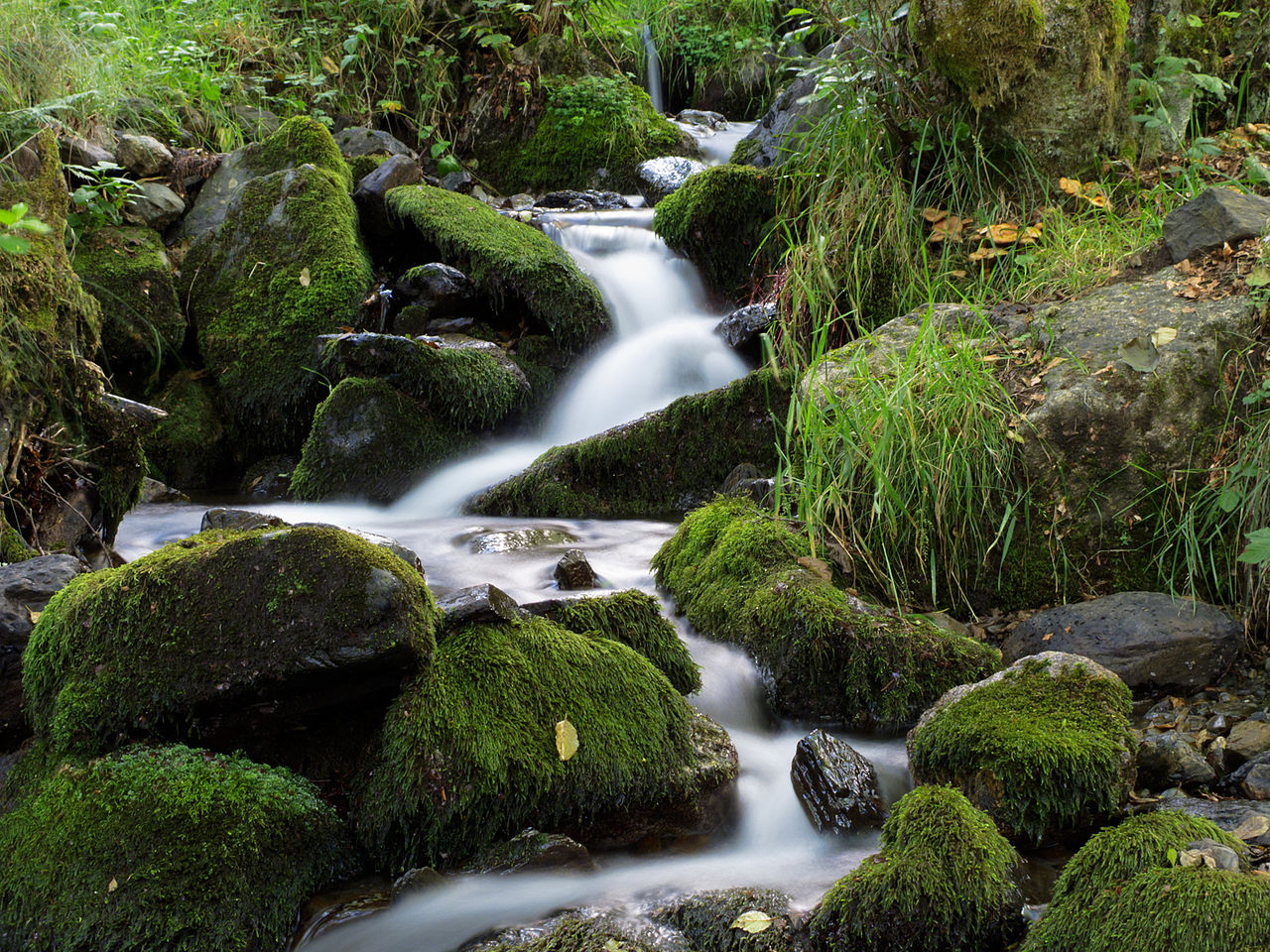
For photographers, variable ND filters enable long exposures in daylight (silky waterfalls, motion-blurred clouds) and wide-open apertures in bright conditions (shallow depth of field at f/1.4 on a sunny day). For videographers, they're even more essential: video requires a fixed shutter speed (typically 1/50s for 24fps, following the 180-degree shutter rule), so the only way to control exposure outdoors without changing your aperture is with an ND filter.
A variable ND replaces carrying a bag of individual fixed-stop ND filters. One filter covers a 3 to 5 stop range, and a two-filter kit can cover 1 to 9 stops. That's the promise. The catch is that variable NDs introduce two potential problems that fixed NDs don't: color cast and the dreaded "X" pattern at higher densities. The filters reviewed here are the ones that handle these issues best in 2026.
How the Team at ExifGrabber Evaluated These Filters
We evaluated variable ND filters on five criteria:
Color accuracy. The best VND filters maintain neutral color across their entire range. We compared shots with and without the filter at each stop and measured the deviation. Any filter that turns your footage green, magenta, or warm at higher densities gets marked down.
X-pattern resistance. All variable ND filters can produce a visible cross-shaped artifact at or near their maximum density. The best designs use hard stops to prevent you from ever reaching that zone. We tested each filter at its stated maximum and beyond.
Build quality. The ring should rotate smoothly with appropriate resistance, not so loose it moves on its own and not so tight that adjusting it shifts your composition. Frame material, threading, and edge knurling all matter for daily use.
Optical sharpness. A filter sits in front of your lens optics. Cheap glass or poor coatings can soften your images. We tested each filter on a high-resolution body to spot any loss of sharpness.
Value. A $200 filter that performs identically to a $50 filter doesn't earn bonus points. We weigh performance against price.
Best Variable ND Filters in 2026
Best Overall: K&F Concept Nano-X True Color VND+CPL
Range: ND2-ND32 (1 to 5 stops) + CPL | Price: $54-$144 depending on size
The K&F Concept True Color VND+CPL is the filter the Team at ExifGrabber recommends for most photographers and videographers. It combines a variable ND and a circular polarizer into a single screw-on unit, which means one filter handles exposure control and glare reduction simultaneously.
The "True Color" designation is backed by a titanium coating technology that solves the yellowing problem common in cheaper variable NDs. Across its 1 to 5 stop range, color shift is negligible. Side-by-side comparisons with no filter show minimal deviation, even at the 5-stop end. The 28-layer nanometer coating repels water, oil, and fingerprints, which matters when you're swapping filters in the field.
The design includes a self-locking mechanism and hard stops at both ends of the range, so you'll never accidentally rotate into the X-pattern zone. A small metal pin on the frame lets you adjust ND strength independently of the CPL orientation, which is a thoughtful design detail.
Why it wins: The 2-in-1 design (VND + CPL) means you carry one filter instead of two. Color accuracy is excellent. The price is aggressive for what you get. Whether you're shooting long exposures on a landscape trip or maintaining your 180-degree shutter angle on a video shoot, this filter handles both without compromise.
Available sizes: 37mm to 82mm at B&H Photo and Amazon.
Best for Professionals: NiSi True Color ND-VARIO Pro Nano
Range: ND2-ND32 (1 to 5 stops) | Price: ~$130-$180 depending on size
The NiSi True Color ND-VARIO Pro Nano is the filter that professional cinematographers and landscape photographers reach for when color accuracy is non-negotiable. NiSi's optical glass and nano coating deliver the most color-neutral results in our testing, with less than a 0.5 delta-E difference from a premium fixed ND at equivalent stops.
The build quality matches the optics. The aluminum frame has a satisfying, damped rotation with clear markings for each stop. Hard stops at 1 and 5 prevent the X-pattern, and the nano coating handles rain, sea spray, and fingerprints with ease. The filter is slim enough to avoid vignetting on wide-angle lenses down to about 16mm on full-frame.
Why professionals choose it: When you're grading footage or processing landscape images, even slight color shifts mean extra correction work in post. The NiSi saves time in editing because it stays neutral. If color is your top priority and you don't need the built-in CPL, this is the one.
Available sizes: 40.5mm to 95mm.
Best Value: Freewell Hard Stop VND
Range: ND2-ND32 (2 to 5 stops) and ND64-ND512 (6 to 9 stops) available separately | Price: ~$70-$90 per filter
The Freewell Hard Stop Variable ND delivers professional hard stops and excellent color neutrality at a price that undercuts the premium brands. Freewell has built a loyal following in the drone and action camera space, and their threaded VND filters bring the same quality to interchangeable-lens cameras.
The hard stop design is the headline feature. Unlike soft-stop filters where you have to judge the rotation by feel, Freewell's VNDs click into place at their minimum and maximum densities. This completely eliminates the risk of hitting the X-pattern, which makes them particularly reliable for run-and-gun video where you're adjusting exposure quickly.
Color performance is very good, though not quite at the NiSi level. At 5 stops you'll see a very slight warm shift that's easily corrected with a minor white balance adjustment. Most users won't notice it without a direct comparison.
Why it's the value pick: You get 90% of the performance of the NiSi at roughly half the price. The hard stops add convenience. If you're building your first filter kit, starting here is a smart move.
Best 2-in-1 Premium: Haida PROII CPL-VND
Range: ND8-ND128 (3 to 7 stops) + CPL | Price: ~$100-$160 depending on size
The Haida PROII CPL-VND 2-in-1 combines a circular polarizer and variable ND into a single unit, similar to the K&F Concept but with a wider ND range (3 to 7 stops versus 1 to 5). The K9 optical glass with 16 layers of multi-coating repels oil, water, and scratches, and the aluminum alloy frame features a protruding metal pin for adjusting ND strength independently.
The wider 3-7 stop range is useful for extreme conditions: bright snow scenes, midday desert shooting, or achieving very long exposures in daylight. However, it means the filter starts at 3 stops, so you can't use it for subtle 1-2 stop reductions. For those situations, you'll need a separate lighter filter.
Best for: Photographers and videographers who shoot primarily in bright conditions and want the widest possible range from a single 2-in-1 filter.
Best Budget: K&F Concept B-Series Variable ND
Range: ND2-ND400 (1 to 9 stops) | Price: ~$20-$40 depending on size
The K&F Concept B-Series Variable ND is the filter to buy if you want to experiment with ND effects without spending serious money. At under $40 for most sizes, it's cheaper than lunch in most cities.
The 1 to 9 stop range is ambitious for this price point, and there are trade-offs. Color shifts become noticeable above 6 stops (expect a warm/green tint), and the X-pattern can appear from about 7 stops onward. The soft-stop design means you need to be careful with rotation at the extremes.
That said, in the 1 to 5 stop range, the B-Series performs surprisingly well. Optical sharpness is acceptable, and the color shift is minimal enough to correct easily in post. For a beginner learning what ND filters do and whether they want one in their kit, this is a no-risk way to find out.
Best for: Absolute beginners, budget-conscious shooters, anyone who wants to try ND effects before investing in premium glass.
Best Magnetic System: Freewell Magnetic VND System
Range: VND 2-5 stops and VND 6-9 stops (separate filters) | Price: ~$150-$200 for the system
The Freewell Magnetic VND System uses a magnetic adapter ring that screws onto your lens once. After that, every filter in the system snaps on and off in under a second. For videographers who frequently adjust filtration between shots, the time savings are substantial.
The system includes interchangeable VND filters covering 2-5 stops and 6-9 stops, plus a CPL and a glow mist filter. All four snap onto the same magnetic adapter. The optical quality of the VND filters matches Freewell's threaded versions, with clean hard stops and good color neutrality.
The system is available in sizes from 62mm to 95mm. If you shoot with multiple lenses, buy the adapter ring in your largest filter size and use step-up rings for smaller lenses.
Best for: Videographers, run-and-gun shooters, anyone who values speed of filter changes.
Variable ND vs Fixed ND: When to Use Each
Variable NDs are more convenient but fixed NDs are optically purer. Here's when each makes more sense:
Use a variable ND when: You need to adjust exposure continuously (video work, changing light conditions), you want to carry fewer filters, or you're working in the 1 to 5 stop range where variable ND quality is excellent.
Use a fixed ND when: You need extreme density (10+ stops for multi-minute exposures), absolute color neutrality is critical (commercial product photography), or you're stacking filters with a polarizer already on the lens.
For most photographers and videographers, a quality variable ND in the 1-5 stop range covers 80% of real-world situations. Add a fixed 10-stop ND for the long-exposure work, and you're covered. If you're into long exposure techniques, see our guide on best ND filters for long exposure photography.

How to Choose the Right Size
Variable ND filters screw onto the front of your lens, so you need the right diameter. Check the front of your lens or lens cap for the diameter marking (e.g., 67mm, 77mm, 82mm).
The smartest approach is to buy one filter in your largest lens diameter and a set of step-up adapter rings for your smaller lenses. Step-up rings cost under $15 for a full set and let a single 82mm filter work on your 67mm, 72mm, and 77mm lenses. You only lose the ability to use the lens cap and lens hood on the adapted lenses, which is a minor trade-off for carrying one filter instead of four.
One caveat: using a large-diameter filter on a much smaller lens via step-up ring can sometimes cause slight vignetting at the widest focal lengths. Test before a critical shoot.
Tips for Getting the Most From Your Variable ND
White balance before attaching the filter. Even the best variable NDs can introduce a subtle tint. Setting a manual white balance with the filter on (using a gray card or auto WB lock) ensures consistent color across your shots. When you review your images later, you can check the exact white balance value stored in the EXIF data using ExifGrabber.
Don't max out the range. Most variable NDs perform best in the lower two-thirds of their range. A 1-5 stop filter is cleanest from 1 to 4 stops. If you need more density, buy a second filter with a higher range rather than pushing a single filter to its limits.
Watch for vignetting on wide angles. Variable NDs are thicker than fixed filters because they contain two polarizing elements. On lenses wider than about 24mm (full-frame), check for darkened corners. Slim-profile filters like the NiSi help, but physics limits how thin a VND can be.
Keep the front element clean. The front of the filter is exposed to the elements. A quick wipe with a microfiber cloth before shooting prevents haze and flare from fingerprints and dust.
Consider the step-up ring approach. Buy one filter in your largest size and use step-up rings for other lenses. This saves money and means your best filter is always available.
Quick Comparison Table
| Filter | Range | CPL | Hard Stops | Color Accuracy | Price Range |
|---|---|---|---|---|---|
| K&F Concept True Color VND+CPL | 1-5 stops | Yes | Yes | Excellent | $54-$144 |
| NiSi True Color ND-VARIO Pro | 1-5 stops | No | Yes | Best in class | $130-$180 |
| Freewell Hard Stop VND | 2-5 or 6-9 stops | No | Yes | Very good | $70-$90 |
| Haida PROII CPL-VND | 3-7 stops | Yes | Yes | Very good | $100-$160 |
| K&F Concept B-Series | 1-9 stops | No | No | Good (1-5 stops) | $20-$40 |
| Freewell Magnetic System | 2-5 + 6-9 stops | Optional | Yes | Very good | $150-$200 |
The Bottom Line
For most photographers and videographers, the K&F Concept True Color VND+CPL is the one to buy. It combines excellent color accuracy with the convenience of a built-in polarizer at a price that doesn't sting. If you're a professional who demands the absolute best color neutrality, step up to the NiSi True Color ND-VARIO Pro Nano. And if you're just getting started and want to experiment, the K&F Concept B-Series at under $40 lets you learn what variable ND filters can do for your work without any financial risk.
Whichever filter you choose, a variable ND is one of the most versatile tools you can add to your camera bag. It opens up creative possibilities that no amount of post-processing can replicate: true motion blur from long exposures, shallow depth of field in bright light, and proper exposure control for cinematic video. If you're also interested in polarizing filters for landscape work, check out our guide to the best circular polarizing filters for landscape photography.