Minimalist Photography: How to Create Powerful Images with Less
What Makes a Photo Minimalist
Minimalist photography strips a scene down to its essentials. Instead of filling the frame with detail, you isolate a single subject, simplify the background, and use empty space as a compositional tool. The result is an image that communicates through what is absent as much as what is present.
This sounds simple, but it is one of the hardest disciplines in photography. When you remove the clutter, every element that remains must justify its place in the frame. A busy landscape can hide weak composition behind layers of detail. A minimalist image cannot.
As an Amazon Associate, ExifGrabber earns from qualifying purchases.
The roots of minimalist photography draw from the minimalist art movement of the 1960s, which emphasized simplicity, geometric forms, and the reduction of content to fundamental elements. In photography, this translates to clean lines, limited color palettes, generous negative space, and a singular point of interest.

The Role of Negative Space
Negative space is the area around and between subjects. In most photography, it is background. In minimalist photography, it becomes the dominant element.
A lone bird against a vast white sky. A single boulder on an empty beach. A person standing in the center of a massive concrete wall. In each case, the negative space is not just filler. It creates scale, mood, and breathing room that draws the viewer's eye directly to the subject.
The key principle: your subject should occupy a small but deliberate portion of the frame. A common ratio is having the subject fill no more than 10 to 20 percent of the image area, with the remaining space left clean and uncluttered.
This does not mean the negative space has to be featureless. A sky with soft gradient tones, a wall with subtle texture, or a body of water with gentle ripples all serve as negative space while adding visual interest. The requirement is that these areas do not compete with the subject for attention.
When reviewing your minimalist shots, check the EXIF data with ExifGrabber to compare settings across your series. Longer focal lengths tend to compress backgrounds and simplify negative space, while wider lenses include more context, and seeing which focal lengths consistently produce your best minimalist results helps refine your approach over time.
Subject Isolation Techniques
Minimalist photography demands that your subject stands apart from everything else in the frame. Here are the most effective ways to achieve that:
Use a wide aperture. Shooting at f/1.8 or f/2.8 throws the background into a smooth blur, eliminating distracting detail and leaving your subject as the only sharp element. This works especially well for minimalist portraits and close-up subjects. A fast prime lens like a 50mm f/1.8 is an affordable starting point.
Increase distance from the background. The further your subject is from the background, the more blurred the background becomes at any given aperture. A person standing three feet in front of a wall will show every brick. Move them thirty feet away from the wall and it becomes a smooth, featureless wash of color.
Shoot against simple backgrounds. Sky, fog, water, concrete, and plain walls are natural minimalist backdrops. Train yourself to notice these surfaces in your environment. A wall that you walk past every day without noticing might be the perfect background for a minimalist portrait.
Use exposure to eliminate detail. Slight overexposure can blow out a bright sky into pure white, creating clean negative space. Underexposure can push dark areas to pure black, achieving the same effect in shadow. This is not about bad exposure. It is about deliberately using exposure as a creative tool.
Color in Minimalist Photography
Color restraint is a hallmark of the genre. The most striking minimalist images often use one of three color strategies:
Monochromatic. A single hue in varying tones. Think of a red umbrella against a red wall, with only the difference in shade separating subject from background. This approach creates a cohesive, almost abstract image.
Black and white. Removing color entirely forces the viewer to engage with form, light, and texture. Black and white minimalism is arguably the purest expression of the style, because you are stripping away one more layer of visual information. Without color, composition and tonal contrast carry the entire image.
Complementary or analogous pairs. A blue sky with a single yellow object. A green field with a red barn. Using just two colors, especially complementary ones, creates visual impact without complexity. The limited palette reinforces the minimalist feel while adding warmth or tension through color contrast.
When processing minimalist images, consider desaturating most colors and boosting only one or two. In Lightroom, the HSL panel lets you selectively control the saturation and luminance of individual color channels. For a deeper dive into editing techniques, see our Lightroom Classic beginner guide.
Composition Rules That Matter More in Minimalism
Every composition principle hits harder in minimalist photography because there is nowhere to hide.
Rule of thirds with purpose. Placing your subject on a third intersection works in minimalist images, but consider why you are placing it there. Off-center placement creates tension and implies movement or direction. Center placement creates symmetry and stability. Both are valid, but the choice should be intentional, not default.
Leading lines. A single line, whether it is a road, a rail, a crack in concrete, or a horizon, can be the entire composition. The line leads the eye through the empty space toward the subject, or simply divides the frame into clean geometric sections. Check out our guide to leading lines for more on this technique.
Symmetry and patterns. Minimalist architecture photography thrives on symmetry. A centered building facade, a perfectly reflected landscape, or a repeating pattern of windows all create visual order that aligns with minimalist principles. Break the symmetry with a single element (one open window, one person, one different color) and you create a focal point that pops.
Frame within a frame. Using a doorway, archway, or window to frame your subject adds a layer of depth while keeping the composition clean. The frame provides structure, and the subject provides meaning.
Best Conditions for Minimalist Photography
Certain environments and weather conditions naturally lend themselves to minimalist work:
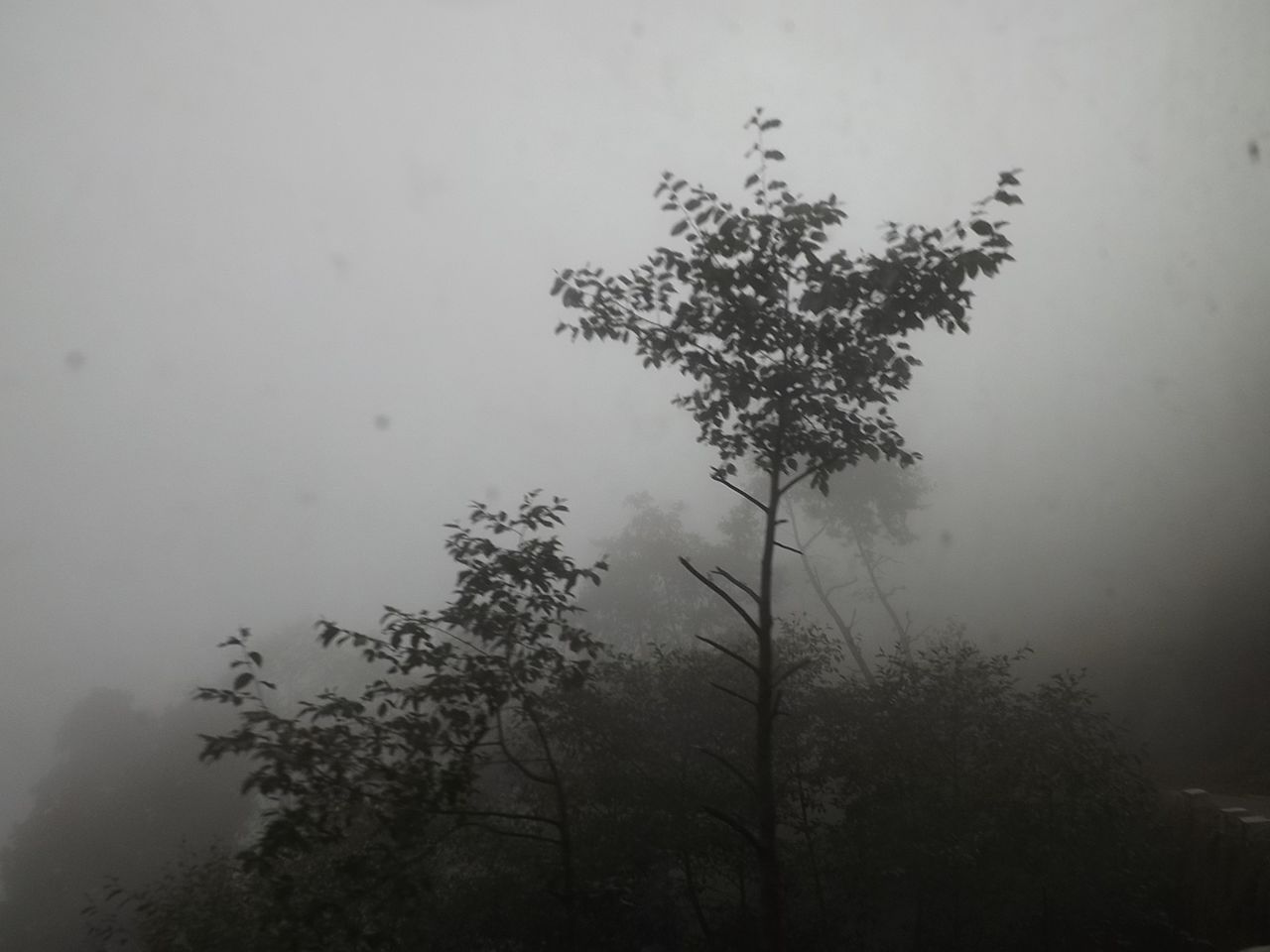
Fog and mist. Fog is the minimalist photographer's best friend. It simplifies complex scenes by obscuring background detail, reduces the color palette to muted tones, and creates natural depth separation between foreground and background. A forest that is chaotic in clear weather becomes a series of fading silhouettes in fog. Get up early when fog is forecast. The best fog shots happen in the first hour after sunrise when the light is soft and the mist is still thick.
Overcast skies. A flat, white sky is essentially a giant softbox that doubles as clean negative space. It eliminates harsh shadows and reduces contrast, giving you even lighting across your subject. Many photographers avoid overcast days, but for minimalist work, they are ideal.
Snow. A fresh snowfall covers the ground in a uniform white blanket, eliminating texture and detail. Objects that would blend into a busy background suddenly stand out against the white. Trees, fences, buildings, and people all become graphic elements in a simplified landscape.
Blue hour and golden hour. The smooth color gradients of pre-dawn and post-sunset skies provide gorgeous negative space. A single silhouetted tree or figure against a gradient sky is a classic minimalist composition. For planning your shoots around these light conditions, see our guide on how to use PhotoPills for golden hour planning.
Urban environments. Modern architecture, parking garages, blank walls, and clean sidewalks offer minimalist backdrops year-round. Look for buildings with repetitive patterns, monochrome facades, or large expanses of uniform material.
Gear Considerations
Minimalist photography does not demand exotic equipment, but certain gear choices help.
A telephoto lens (70mm to 200mm). Longer focal lengths compress perspective and isolate subjects against simplified backgrounds. A 70-200mm f/2.8 is the workhorse for minimalist landscape and urban work. You can stand far from your subject and use the narrow angle of view to exclude distracting elements that a wide lens would include.
A fast prime (35mm, 50mm, or 85mm). Primes force you to move and compose more deliberately, which aligns with the minimalist mindset. Their wide apertures provide beautiful background blur for subject isolation.
A tripod. For long exposure minimalist work, especially water and sky smoothing, a stable tripod is essential. Long exposures of several seconds or minutes turn choppy water into glass and moving clouds into soft streaks, both of which simplify the frame. See our best tripods for travel photography guide.
ND filters. Neutral density filters allow long exposures in daylight, which is key for the smooth-water minimalist look. A 6-stop or 10-stop ND filter turns a busy seascape into a serene, minimal composition. Our ND filter guide covers the options in detail.
Common Mistakes to Avoid
Too empty. Minimalism is not the same as emptiness. An image of a blank wall with nothing else in it is not minimalist photography. It is just a blank wall. You need a subject, however small, to give the viewer something to anchor on. The tension between the subject and the space around it is what creates the minimalist effect.
Messy edges. In a busy image, a stray branch or power line at the edge of the frame gets lost in the noise. In a minimalist image, it screams. Check your edges carefully before pressing the shutter. Move slightly, zoom in, or plan to crop in post.
Overthinking it. Some of the best minimalist images are found, not constructed. A shadow falling across a sidewalk. A bird landing on a wire. Rain collecting on a car hood. Keep your camera accessible and your eyes open for these moments.
Ignoring texture. Flat, featureless negative space can feel lifeless. Subtle texture in the background, such as the grain of concrete, the pattern of water ripples, or the weave of fabric, adds depth without adding distraction.
Fighting the light. Harsh midday sun creates complex shadows and hot spots that complicate minimalist compositions. Work with softer light sources, or use the hard shadows deliberately as graphic elements. If the sun is creating a strong, clean shadow line across a wall, lean into it: that line becomes part of your composition.
Post-Processing for Minimalism
Editing minimalist images should reinforce the simplicity you captured in camera.
Clean up distractions. Use the healing brush or clone stamp to remove small blemishes, dust spots, or unwanted objects that survived your in-camera composition. In a minimalist image, even a tiny speck draws the eye.
Simplify the tonal range. Pull down highlights and shadows to create a narrower tonal range. This flattens the image slightly and creates a dreamy, ethereal quality that suits many minimalist styles.
Selective color adjustment. Desaturate colors that compete with your subject. Boost or shift the color of your main subject to make it pop. The goal is a limited palette that feels intentional.
Consider negative clarity. A slight reduction in clarity (around -10 to -20 in Lightroom) softens micro-contrast and gives backgrounds a smoother, more minimal feel. Use this sparingly as too much creates an artificial glow.
Crop with intention. If your in-camera composition was close but not quite right, crop to strengthen the balance between subject and space. Minimalist images are particularly sensitive to crop ratios. Experiment with square, 4:5, and 16:9 crops to find what suits each image.
Genres Within Minimalist Photography
Minimalism is not a single style but a philosophy that applies across genres:
Minimalist landscape. Lone trees, smooth water, single mountains against clear skies. Long exposure seascapes are a staple. The genre overlaps heavily with fine art photography, and prints tend to sell well because of their clean, decorative quality.
Minimalist architecture. Clean lines, geometric shapes, repetitive patterns, and monochrome facades. Modern buildings are natural subjects, but older structures with simple forms also work. Look for buildings designed by architects known for minimalism, such as Tadao Ando, John Pawson, or Claudio Silvestrin.
Minimalist street photography. A single figure against a large wall. A lone umbrella in a rainstorm. Street minimalism requires patience, because you need to wait for the right person to walk into the right spot within your pre-composed frame.
Minimalist portraits. A face against a solid background. A silhouette against a window. Minimalist portraiture strips away props, complex lighting, and busy backgrounds to focus entirely on the subject's expression or form.
Abstract minimalism. Close-up details of surfaces, reflections, shadows, and light patterns. At this scale, the subject often becomes unrecognizable, and the image exists purely as form and color.
Building a Minimalist Eye
The most important gear for minimalist photography is not a camera or lens. It is the ability to see simplicity in complexity.
Practice by constraining yourself. Spend a day shooting with only one lens at one focal length. Limit yourself to black and white. Try to make ten images where the subject occupies less than 20 percent of the frame. Shoot only vertical compositions, or only squares.
These constraints force you to look harder at your environment. You start noticing the clean wall behind the busy street. The gap in the fence that frames the sky. The single leaf on the wet sidewalk. Once you train your eye to find these moments, you will see minimalist compositions everywhere.
Study the work of photographers who excel at minimalism: Michael Kenna's long exposure landscapes, Hiroshi Sugimoto's seascapes, Fan Ho's Hong Kong street scenes, and Hossein Zare's surreal composites. Each brings a different sensibility to the same underlying principle: less is more, when you make that "less" count.